World Cup Logistics for San Francisco
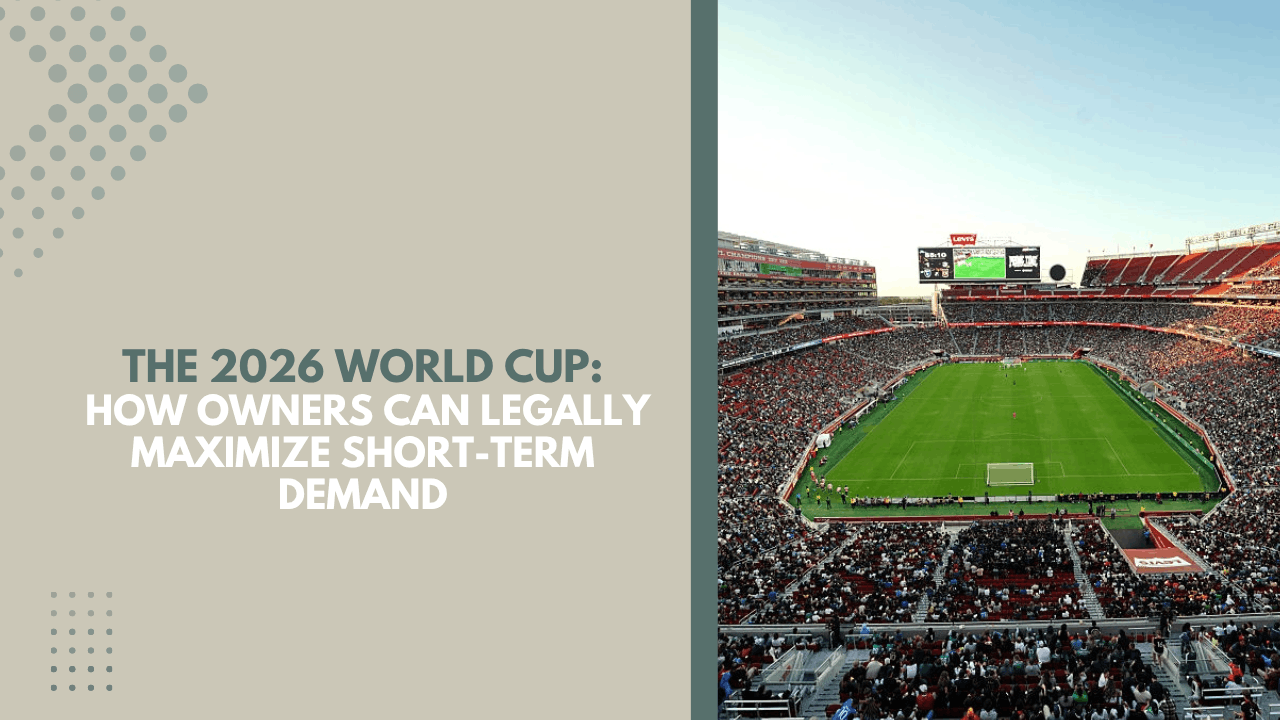
The 2026 FIFA World Cup will be one of the largest global sporting events ever hosted in North America. Taking place from June 11 through July 19, 2026, the tournament will feature 48 national teams and 104 matches across the United States, Canada, and Mexico, making it the biggest World Cup in history.
With hundreds of thousands of
international fans expected to visit the region, demand for lodging will surge. The Bay Area alone is expected to welcome hundreds of thousands of visitors, with economic impact estimates reaching hundreds of millions of dollars.
Although the matches themselves will not take place in downtown San Francisco, the city will still serve as a major hub for visiting fans. Hotels and traditional accommodations are unlikely to absorb all of the demand, which means short-term rentals could see significant increases in occupancy and nightly rates.
While the World Cup will take place across multiple cities in North America, the San Francisco Bay Area will host several matches at Levi’s Stadium in Santa Clara, about 40 miles south of San Francisco.
The stadium will host six matches, including:
- Five group-stage games
- One Round of 32 knockout match
These matches will take place across several weeks in June and early July 2026.
Many travelers prefer to stay in San Francisco because of its tourism appeal, nightlife, and access to transportation.
Understanding San Francisco’s Short-Term Rental Laws
Before planning to host visitors during the World Cup, property owners must understand San Francisco’s short-term rental regulations under Administrative Code Chapter 41A.
The most important rule is that short-term rentals are only allowed in a host’s primary residence.
This means:
- The host must live in the unit at least 275 nights per year
- Only the unit where the host lives can be rented short term
- Non-owner-occupied investment properties cannot legally operate as full-time vacation rentals
This restriction prevents landlords from converting entire apartment buildings into short-term rental operations.
For real estate investors who own multi-unit rental properties, this rule significantly limits the ability to use units as short-term accommodations during major events like the World Cup.
Hosted vs. Unhosted Rentals
San Francisco regulations distinguish between two types of short-term rentals: hosted rentals and unhosted rentals. Understanding this difference is critical for maximizing opportunities while staying compliant.
A hosted rental occurs when the owner or tenant remains in the home overnight while guests stay in the property. Examples include:
- Renting a spare bedroom
- Hosting guests in a private section of the home
- Living in the property while guests stay in another room
Hosted rentals do not have an annual limit on the number of nights they can be booked. For homeowners planning to remain in the city during the tournament, this model can provide significant income potential.
An unhosted rental occurs when the host is not present overnight while guests stay in the property. Examples include:
- Renting the entire home while traveling
- Temporarily moving out during guest stays
San Francisco limits unhosted rentals to 90 nights per year.
For property owners who plan to leave the city during the summer, reserving those 90 nights for the World Cup window could allow them to take advantage of peak demand.
Registration and Compliance Requirements
Before operating any short-term rental in San Francisco, hosts must complete several legal steps.
Property owners must obtain a Short-Term Rental Certificate from the Office of Short-Term Rentals.
To qualify, hosts must:
- Verify that the unit is their primary residence
- Register a business with the city
- Maintain at least $500,000 in liability insurance coverage
- Ensure the property complies with building and safety codes
Registration must be completed before listing the property on any short-term rental platform.
Operating an unregistered short-term rental can lead to daily fines and enforcement actions, so owners interested in hosting during the World Cup should begin the registration process well ahead of the event.
Taxes and Financial Obligations
Short-term rentals in San Francisco are subject to the Transient Occupancy Tax (TOT)
This tax applies to stays shorter than 30 days and is currently 14 percent of the rental price.
Most large booking platforms automatically collect and remit this tax on behalf of hosts, but property owners should verify how taxes are handled for each booking. Additional financial responsibilities may include:
- Annual business registration renewals
- Property-related business taxes
- Compliance reporting for short-term rental activity
Understanding these obligations helps ensure that rental income during the World Cup does not create unexpected legal or tax issues.
Strategies for Rental Property Owners in San Francisco
Even with strict regulations, San Francisco property owners can still benefit from the World Cup by planning strategically.
Below are several approaches that remain compliant with city law.
1. Host Guests in Your Primary Residence
Homeowners who live in San Francisco can rent spare bedrooms or portions of their home while remaining on site. Because hosted rentals have no annual night limits, this approach offers the greatest flexibility during the event.
For example, a homeowner with two extra bedrooms could host multiple groups of fans across the tournament’s six-week window.
2. Reserve Your 90 Unhosted Nights for the Tournament
Hosts who plan to travel during the summer may want to allocate most of their 90 unhosted nights to the weeks surrounding the World Cup matches. Demand will likely peak during:
- Bay Area match dates
- The knockout round period
- Major fan festival weekends
By focusing those nights during the highest-demand window, hosts can maximize rental income.
How Can You Prepare the Property for International Visitors?
World Cup visitors will arrive from all over the world, many of whom may be visiting the United States for the first time. Properties that perform best during international events typically offer:
- Reliable high-speed internet
- Easy self-check-in options
- Clear house instructions
- Local transit and stadium access information
Hosting short-term guests during a high-profile event requires
careful management. Owners should prepare for several operational challenges.
- Noise and Occupancy Controls
Sports fans often travel in groups and celebrate late into the night. Clear house rules should outline maximum guest limits, quiet hours, and prohibited party activity. Establishing expectations early helps prevent conflicts with neighbors.
High occupancy during the tournament could lead to
frequent guest turnover. Property owners may want to arrange professional cleaning services to maintain consistent standards between bookings.
Short-term rental activity can introduce additional liability risks. Hosts should confirm that their insurance policies cover guest stays and short-term rental operations. Some owners choose specialized short-term rental insurance for additional protection.
Avoiding Common Legal Pitfalls
During major events, some property owners attempt to bypass short-term rental restrictions.
Common violations include:
- Renting units that are not a primary residence
- Listing multiple units in the same building
- Operating rentals without city registration
San Francisco actively enforces short-term rental regulations and regularly removes illegal listings.
Violations can result in:
- Significant daily fines
- Platform listing removal
- Legal enforcement actions
Remaining compliant protects property owners from costly penalties.
FAQs for San Francisco Property Owners
The 2026 FIFA World Cup represents one of the largest tourism opportunities the Bay Area has ever seen. While San Francisco’s strict short-term rental regulations limit how landlords can participate, property owners who understand the rules can still benefit significantly from the surge in global visitors.
Q: Do I have to use my primary residence only?
A. Yes. This is the foundation of our city’s strict laws. You must only operate a short-term rental within your primary residence.
Q: Where do I register?
A: Register within San Francisco’s Office of Short-Term Rentals
Q: What is the 90-day limit?
A: In an unhosted rental (meaning you won’t be living in your home at the time), you can rent your place for up to 90 days in one year.
Q: What kind of taxes are involved?
A: You’ll need to pay the Transient Occupancy Tax to the city.