Why Does Amenity Demand Not Match Amenity Supply?
Across the U.S., there’s a consistent mismatch between what renters want and what properties offer. But in high-cost, supply-constrained cities like San Francisco, this gap is amplified.
For example, The Rental Housing Journal
recently reported that in-unit laundry and parking are consistently among the most in-demand amenities, yet those things are under-supplied relative to demand in our market.
Modern amenities arrive slowly in San Francisco rental homes because much of the inventory here predates contemporary expectations. Aging structures complicate upgrades, from wiring to plumbing, and
strict preservation norms can delay renovations. As a result, tenants frequently encounter dated kitchens, limited connectivity, and fewer conveniences than newer developments offer elsewhere.
Owners have a unique opportunity to make the adjustments necessary to attract quality tenants who are looking for their non-negotiables when it comes to amenities.
Here’s what those are.
Parking: Still a Major Differentiator
In a city known for public transit and walkability, it’s tempting to assume parking is optional. That’s a mistake. Everyone complains about parking in San Francisco because it’s difficult to find and expensive. People want the ease of
parking at their homes.
And that’s why this amenity is a non-negotiable for so many tenants.
Parking in San Francisco is less about convenience and more about reducing friction in daily life. Street parking is limited, enforcement is strict, and many neighborhoods make car ownership logistically difficult. As a result, parking can materially expand your renter pool and justify premium pricing.
Even in a city where many residents don’t drive daily, having a secure, predictable parking option remains a strong psychological and financial value proposition.
- If your property includes parking, highlight it prominently in marketing materials and listings
- If it doesn’t, consider partnerships (nearby garages) or creative leasing strategies
- Treat parking as a revenue stream, not just an add-on
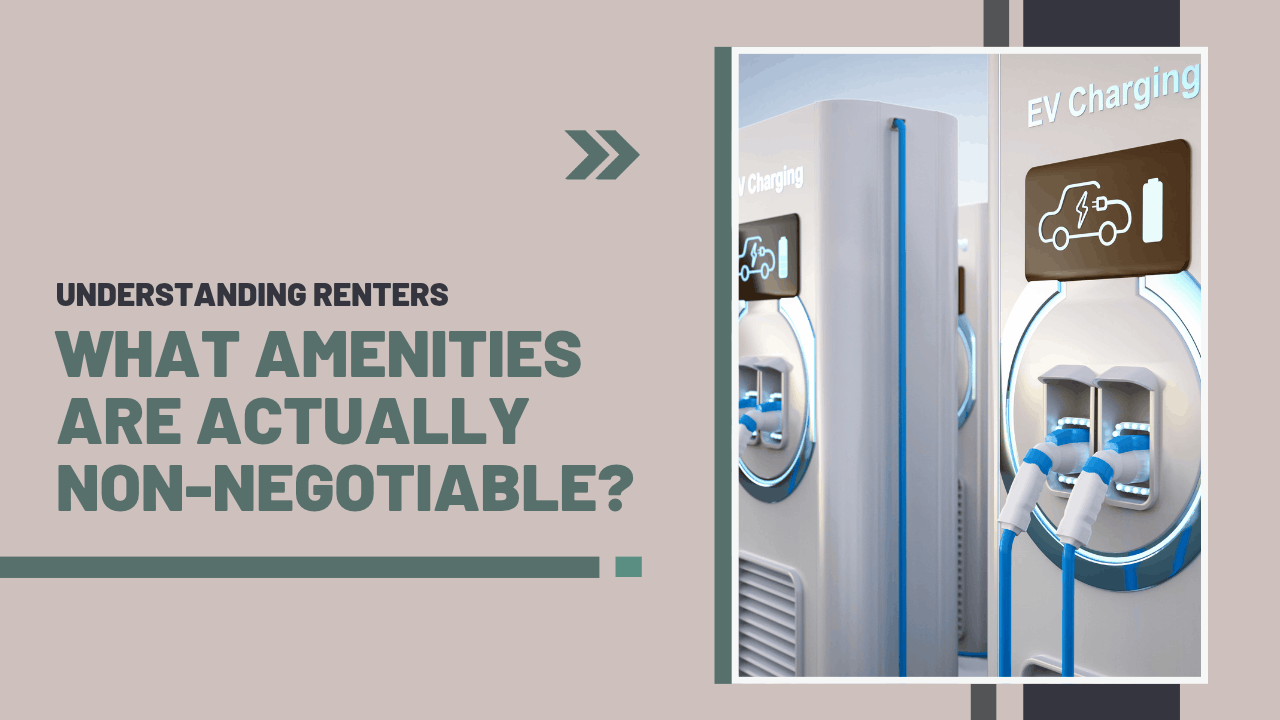
EV Charging: From Luxury Amenity to Future-Proofing Opportunity
Electric vehicles are no longer niche in California, and San Francisco is actively investing in EV infrastructure to accelerate adoption. The city is expanding curbside charging in response to the reality that a majority of residents lack off-street parking, which limits EV ownership.
Electric vehicle (EV) charging infrastructure is required in new San Francisco multi-unit residential buildings starting January 1, 2026, under updated California Green Building Standards (CALGreen) and local requirements. Check the California Department of Housing and Community Development for specifics:
CALGreen.
For landlords, this creates both a compliance challenge and an opportunity to attract a wider pool of residents.
- Existing Buildings: While the 2026 mandate covers new construction and major renovations, existing buildings must ensure they are "EV ready" if parking is added or altered.
- Right to Charge (Existing Buildings): California law allows tenants to request to install EV charging in their assigned space. The landlord must approve this request, provided the tenant covers the costs and uses a licensed installer, as long as the building has five or more parking spaces and the landlord hasn't already installed chargers in 10% of spaces.
- Exceptions: Parking facilities with automated mechanical lifts may be exempt if they are deemed incapable of supporting the infrastructure
Properties that already offer EV charging, or are pre-wired for it, signal forward-thinking infrastructure.
California’s “right to charge” policies (widely discussed among tenants and landlords) are pushing more buildings toward accommodating EV infrastructure.
In-Unit Laundry: The Closest Thing to Non-Negotiable
Parking is ever-important to tenants in San Francisco, but not everyone owns a car.
But everyone needs to wash their clothes.
So if there’s one amenity that consistently rises above the rest, it’s in-unit laundry.
In San Francisco, where many buildings are older and not designed for modern appliances, in-unit laundry is still relatively rare. But demand is overwhelming.
Why is it so critical?
- Time savings in a fast-paced city
- Avoiding shared or off-site laundry facilities
- Increased privacy and convenience
Our experience has demonstrated that listings including in-unit laundry see dramatically higher engagement, reinforcing its role as a decision-making factor and not just a preference.
If feasible, prioritize adding in-unit laundry over cosmetic upgrades. Even compact or all-in-one units can deliver significant ROI.
This is one of the few amenities that can directly impact the
speed with which you lease your rental home.
Smart Home Technology as a Rising Expectation
San Francisco renters,
particularly those working in tech, have higher expectations around digital convenience. Smart home features such as these are becoming increasingly common in new buildings and renovated units:
- Smart locks
- App-controlled thermostats
- Video intercom systems
- Package management solutions
Smart tech is moving quickly into the baseline expectations for tenants. This matters because smart home tech aligns with tenant lifestyles, which are mobile-first and app-driven. These features enhance perceived value without major structural changes, and they can also improve operational efficiency (remote access,
energy savings).
We can tell you that smart upgrades are relatively low-cost compared to structural renovations. They can meaningfully differentiate older properties. When marketing this amenity in your listings, we recommend that you focus on usability and convenience.
The Shift Away from Traditional “Luxury” Amenities
Interestingly, renters are increasingly deprioritizing traditional amenities like:
- Gyms
- Pools
- Business centers
In some cases, demand for these features is relatively low compared to practical amenities. This indicates a new economic reality and a new set of priorities that tenants have. Renters are prioritizing functional convenience over lifestyle extras. In a city where space is limited and rents are high, tenants are asking a simple question: Does this feature make my daily life easier?
If the answer is no, it’s unlikely to drive leasing decisions.
That doesn’t mean you should close up the fitness center in your building if you already have one. These are still nice amenities to have, they’re simply not showing up in the average tenant’s list of non-negotiables.
Putting It All Together: What’s Truly Non-Negotiable?
Based on market data and local dynamics, San Francisco rental amenities fall into three tiers:
- Tier 1: Non-Negotiable (or close to it)
- In-unit laundry
- Parking (especially in certain neighborhoods)
- Tier 2: Rapidly Becoming Essential
- EV charging (or EV-ready infrastructure)
- High-speed internet readiness
- Tier 3: Competitive Differentiators
- Smart home technology
- Package handling systems
- Updated kitchens and appliances
Our key insight as
professional property managers in San Francisco is this: practical, time-saving amenities consistently outperform lifestyle luxuries.
Luminor Real Estate’s Strategic Recommendations for Property Owners
If you’re deciding where to invest capital, prioritize upgrades that directly impact daily living:
1. Start with infrastructure like laundry, parking, and EV readiness
2. Layer in technology that includes smart locks and thermostats
3. Avoid over-investing in low-impact amenities
In a market like San Francisco, renters are willing to pay for amenities, but only for features that solve real problems.
Our FAQs
Q: Is parking always necessary in San Francisco rentals?
Not always, but it significantly increases appeal and pricing power, especially in neighborhoods with limited street parking.
Q: How important is EV charging today?
It’s not universally required yet, but new buildings must have it, and demand is growing quickly. Properties that offer it are better positioned for the future.
Q: Is in-unit laundry worth the installation cost?
In most cases, yes. It’s one of the most requested and undersupplied amenities, making it a strong ROI investment.
Q: Do renters care about smart home features?
Increasingly, yes, especially in newer or renovated units. While not mandatory, they enhance competitiveness.
Q: Are gyms and pools still valuable?
They can help, but they’re no longer primary decision drivers for most renters.